Samantha Irby on being a person
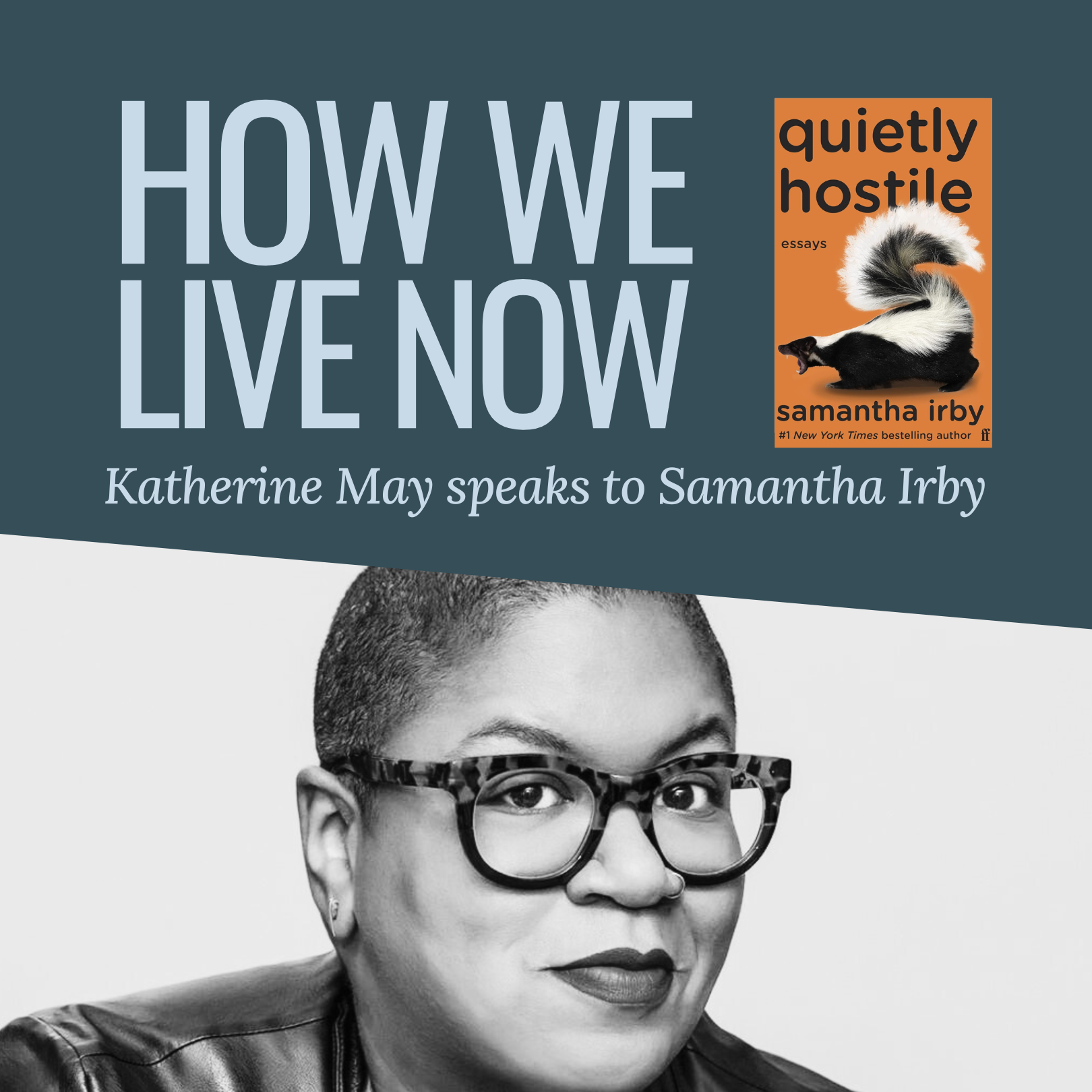
How We Live Now with Katherine May:
Samantha Irby on being a person
———
Recorded as part of my True Stories Book Club hosted on Substack, we talked about realising you have a body again after lockdown, dogs that don’t love us enough/love us too much, writing about the darkest parts of our life, and terrorising Sex and the City fans by writing on And Just Like That…
Listen to the Episode
-
Please note, this is an automated transcript and as a result
there may be errorsKatherine May: So, the screen is flickering which means that things are going down. Uh, I hope you're all appreciating my screen which covers the rest of my Sam
Sam Irby: Irby! Welcome! Hi! Hi, everybody. Thank you for, now I'm realising I should have cleaned my office a little better. The screen, the
Katherine May: screen is just awesome. Look at it.
Sam Irby: You know what, Katherine, you are better than I am at many things, uh, this included. Next time we do this, I
Katherine May: will have a screen! Look, it's only because my son does his homework behind there and when, when I first installed, he's not there right now, but when I first installed his desk I was like, you have to keep that desk so tidy because it's going to be on screen all the time.
Of course he hasn't, it's disgusting. I mean it's just horrifying.
Sam Irby: I agree. I empathize with him because I, and you would think because like being at a desk is my job that I would take pride and have a neat and tidy desk. I don't. No, I don't. I don't have a neat and tidy office. Mine's awful. I have a neat and tidy nothing.
Katherine May: Yeah. Can't do it, won't do it. Yeah, look, my desk is horrible, but it's just not on camera, so I'm fine with that, you
Sam Irby: know. It's just, yeah. So, do people ask you to workspace? because you're a writer thing and I'm always like absolutely not. You can't have that.
Katherine May: You don't get that. The amount
Sam Irby: of cleaning I would have to do to hide the shameful conditions in which I hover over.
my keyboard. I cannot, I cannot show those to anyone.
Katherine May: I recently, oh god, I probably shouldn't admit this, but recently, so, so one, one of the genres of weird videos that my son likes on YouTube is like keyboard building videos. Oh, okay. It's a, it's a thing. He's not into porn yet. Um, won't be long. But at the moment it's keyboard building.
And, um, And there was this video recently where this guy was like, look how disgusting this keyboard is. I can't believe, like, nobody keeps their keyboard like this, honestly. And I looked at it and I was like, well that is less bad than my keyboard. And he tipped it upside down and all these crumbs dropped out and I was like, yeah.
And he's going, what, does this person eat over their keyboard? It's like, well, where else am I going to
Sam Irby: eat for Christmas? Like, who doesn't? I feel like the person who doesn't eat over their keyboard is The Freak, not us. We're trying to keep ourselves
Katherine May: going. Yeah, we've got a few of those right. Anyway, sorry, Sam, welcome.
Thank you. Katherine,
Sam Irby: this is like the dream of my life. I'm so excited. I'm trying to keep myself together and be professional, but I cannot believe I'm talking to you. Well,
Katherine May: the feeling's completely mutual. I'm so excited and, um, well, I, I've got loads of questions to ask you, but, you know, please don't, like, feel like you've got to answer all of my fangirl questions.
I will answer every single one. Well, here we go. All right, so let's begin. And guys who are listening, um, if you have questions, then please do use the Q& A box and I will ask them at the end, um, try and get through as many as we can. But please do ask, don't be shy because, um, you know, it's always really great to have you asking too.
Sam Irby: I hate a shy audience. I mean, I respect the shy audience, but. Don't, don't be shy with us. Like, save that for, you know, like someone like lofty and important. Like with us, just, you know, Let it hang, like just say what you're not going to stare
Katherine May: at your questions. Yeah, no,
Sam Irby: I'm going to take them as seriously as possible.
Katherine May: Full gravity will be given to all questions. So backstage we were talking about like what it's been like to emerge from lockdown and that's where Your book begins and I just, I just wondered like, did you go into full goblin mode during the pandemic and are you fully out of it? That's my first question.
Sam Irby: Okay, I embraced probably, probably too much Goblin Mode. Like, I, you do not need to push me to stay inside all the time. Like, you know, there are people who were, and I feel for them, who were genuinely, who felt like they were in solitary confinement, like it was punishment. And for me, I was like, Oh, great. I don't have to, I think a lot of the things.
You know, I'm mentally ill, which is okay. And a lot of that mental illness gets exacerbated by Leaving the house, you know, there are just things I have pretty recently diagnosed, I think in the last couple of years, OCD. And one of the ways my OCD manifests and tortures me is that I would love, and you cannot exist in the world this way, but I would love to be able to control all of my surroundings and circumstances.
Yeah, right. Yeah. For a person like me, it was like, Oh, great. I get to stay inside. There are no external variables. that I have to prepare for, or, um, that could disrupt, you know, the course of the day. Like, all of these things that vex me. Leaving the house is, is where those things happen. And staying inside, I'm safe from all that.
I'm in control of what I'm doing. I'm in control. I mean, you know, I can't control, like, what the cats. do, but they don't really stress me out. Uh, so it, I fully retreated probably too much. I got too comfortable. I definitely stayed locked down longer. then we had to, I mean, who knows? Like we still are kind of supposed to, right?
Like we did, you know, the, the guidelines are difficult. They've been hard to follow, but I'm not sure they're very clear anymore. I know. No one knows what to, I mean, now it's like, you know, just do what feels right. I guess, but like we don't know any, like I'm not a scientist. No one knows anything. But yeah, I fully embrace it.
Like it never felt right in the first place. Right, right, right. I mean all the conflicting messages we got. And so for me, I said this backstage. You know, the news in America, at least, was like, Fat people, you will die. This is the fat people killing disease. And I was like, you don't have to tell me twice. I will see you inside my
Katherine May: home.
Bye everyone.
Sam Irby: For as long as I have to be here. And then, I definitely, mentally, physically atrophied. You know, I got too, too comfortable being inside and when it came time to go outside again, I had a very hard time. And still, um, I'm having a hard time adjusting to being outside. back in society. And not in, not in like a scary way, but just in a, you know what I really loved, Katherine?
I loved not being perceived, not having to think about what, what does that person over there think about the things I have chosen to wear, or the way I drive and park the car, and you know, little things like that. I was, I just was really comfortable in not being judged. And so when we were allowed to go back outside, I felt like I was under a microscope.
And no one cares. what you do. Everyone's like, living their own life, but it felt to me like I forgot how to be outside.
Katherine May: I like, I, I kind of, I'm still going through this actually, I've completely forgotten how to wear clothes. Like I used to feel like I knew what I wore and in what situation and I've emerged from the pandemic.
And I, you know, I think cause like I've got older in that time. Like it's, it's kind of come, I think we're more or less exactly the same age. Aren't we? What, how old are you? Is that terrible? 44. You're 44. Okay. So I'm 40. Am I 45 or 46? Anyway, we're a similar age. Yeah, anyway, but like in that, I think in that time, it was like this really crucial sort of body transition time and clothes are just not the same anymore for me.
And I've come out like, I don't know, I don't know how to dress appropriately. I'm not comfortable in anything. Every outfit I choose feels different. like the wrong outfit once it's delivered into the world. Like it seems great in my house, but as soon as I leave the house, it's like, Oh no, no, no, I fucked this up again.
Sam Irby: Oh my God. Okay. First of all, I'm going to be texting you about this constantly. So get ready for that because I feel the same exact way. Nothing feels good. And a thing, Oh, I do not want to be a person who references their Psychiatrist a lot, but my psychiatrist says one of the things she pointed out to me that I ways in which I am self sabotaging is I kind of attach a fantasy to a thing, not a big because we are fantasy and we think like it's a big thing, but I think like this dress.
It's gonna look so good. It's gonna be right. I'm gonna walk in. I'm gonna feel great. I'm gonna feel confident. Everyone in the room is gonna be like, wow, she picked a good dress. And so then the dress arrives or I go get the dress and it has to live up to all of these expectations. It's not even a dress anymore.
It's like a magic, uh, magic cloak. And, and so I'm always going to be disappointed because it's never going to live up to the expectations. I have put on it.
Katherine May: And I have no mirrors in my house. Like I have a mirror over the bathroom sink that I can watch myself brush my teeth in, but that's it. And so it's a shock.
It's like a shock. It's like, oh, I look like that. Oh yeah, it's, it's ridiculous really.
Sam Irby: Every time I see a picture of myself, I'm like, Who's that? I mean, not really, but also like, like, oh, oh, oh, okay. In my, like, looking down, it's so, I mean, tell me if this, feels like nuts to you, but looking down at my outfit versus seeing my reflection in the outfit is like, it's like, what am I wearing?
I went to the eye doctor the other day and I thought I looked okay. It was a new eye doctor. I tried to I didn't dress up, let's be serious, but I wore things that were clean. Yes, yep, important. And at one point I was walking through the office and I was like, No!
What did I do? What's wrong? with my eyes. So I know I feel you where nothing is right. And I never, I should say, I never felt like that before. No, I don't think I did.
Katherine May: No, no. Yeah, this is something recent for me. Like there's been this rupture in time. That's the problem. Yeah. But you, you also got a, um, a pandemic dog, didn't you?
I got one just before the pandemic, but it's similar. I relate.
Sam Irby: I'm currently hiding from him. Um, we got, so, I mean, this to me was one of the, it's just, you know, we did so many things during the pandemic that, You know, I had no idea would like have like lifelong repercussions, like the clothing and the, you know, feeling weird being in the car.
Um, but the dog I knew was going to impact us forever. We went, I mean, my wife has two kids who. are great and it was at the time in the pandemic where it was really like we're just looking at each other all the time. We have nothing new to say. Nothing interesting is happening. It's not great for
Katherine May: relationships.
Sam Irby: We all need to introduce another element to get each other off everyone else's back. And so, my wife, Kirsten, was, on the SPCA website, like looking at cute, perfect, tiny dogs who are like allergic to exercise and just want to be held and they all got adopted immediately and we ended up getting a chihuahua mix puppy.
We did not want a puppy but we got a puppy who is I mean, honestly, demonically possessed.
He's the worst. He's so bad and he's going to live forever. He weighs nine pounds, so he's going to live forever. Every day is structured around what we have to do with this stupid dog. We, I take him three or four times a week to a little daycare so he can run around. It's so expensive. He's like It's, I mean, it's not, it's like 20 a day, but when you go three times, I truly have to do freelance work to pay for the dog, uh, daycare.
But if he doesn't go to daycare, then he's like an anxious mess. He is on Prozac as am I. It's quite nice to share that together. We ran out of his prescription once and I was like, Oh, he can have half. Um, and it, I mean, he truly, you know, he's imprinted on this is the problem is he doesn't love me as much as he loves everyone else in the house.
I wouldn't. I am one of those animal people who is obsessed with animals. Desperate for the affection of the pets. Desperate. I would do anything for these animals to love me and they can sense it and they reject me because I want it too much. We
Katherine May: should swap dogs. Like my dog loves me too much and cannot bear me leaving her.
And I'm like I'll take her. Give me some freedom. She just, she doesn't want anyone else. She just wants me endlessly. It's really, it's very sweet, but it's quite overwhelming when you have to like work and shop.
Sam Irby: That is how Abe is with Kirsten. If, if she leaves the room, he runs to me in a panic like, And you believe she left.
And I'm like, hey, I'm here. And he's like,
Katherine May: not you.
Sam Irby: So it's a disaster. She'll whine at the
Katherine May: door until I come back.
Sam Irby: She will. He scratches. He scratches at the door. He paces. And I'm like, I don't want to sit. Well, first of all, how could you not love me? All I do is relax. Like, isn't that what animals like? All they want to do is like, hang out.
And I'm here hanging out. And he's like, no. I do. I love him. And he's cute. And right now he's sleeping in my bed, which I think is adorable, but I wish he loved me more.
Katherine May: It's honestly, we're going to have to swap dogs. Although, of course, she wouldn't detach from me to do that. I know, I know.
Sam Irby: I would come pick her up and she'd be like, when are we going back to my actual mom?
Katherine May: I was about to say she's about 20 stone, that's a lie, but she is She's a chunky dog. She's only got like three properly working legs and so she doesn't like walking very far. And so she's like a little, and she's got a thyroid complaint. She's expensive. She's really.
Sam Irby: So is this. I mean. Worse than the kids, almost.
Oh
Katherine May: yeah, yeah, I think I do, I think I do spit more on the dog. Yeah, yeah, anyway, but yeah, it's really, I really, I love this kind of common, uh, how many people got pandemic dogs and they're all really weird dogs because they're all quite, they, they're under socialized like we were.
Sam Irby: Yes, yeah, that's why we had to do the daycare because it was just, And then it was like, Oh, wait, you bark.
He, I mean, he's gotten better, but it's like, you know, he would see someone with a lawnmower and, and freak out or someone like pushing a walker. And it's like, you, you don't know anything. Oh, you poor thing. We have to take you and do more stuff. So he's, he's much better. He is the most fetid over dog in America.
He really truly is. Yeah, he truly truly is. And yet, still unhappy and doesn't show his gratitude to me, the one person who is desperate for it. Yeah,
Katherine May: well, they never do what you want. We also have a. Kat who is so anxious that we have to like sprinkle anti anxiety powder over her food every morning and if we speak out like, yeah, it's amazing.
It is actually, I mean, her pupils get a little dilated for a while and she looks like she's, Not quite sure where she is, but she's, yeah, she's awesome all of a sudden. But she, she like licked herself bald during lockdown. She got so, she hated us being around so much. She like licked bald patches into herself.
I'm sorry to laugh. Animals, I know, I know. She's this really glamorous, like slinky black witch's cat, but with the bald patches it was not, it was not so, So lovely looking, honestly. Yeah. Oh, poor girl. But we all understand anxiety, you know. I
Sam Irby: was gonna say, she's in the right house. She is, yeah,
Katherine May: we totally
Sam Irby: get
Katherine May: it, we're fine.
Sam Irby: Just like our anxious dog. He is, he's, he found his people.
Katherine May: Yeah.
Sam Irby: I'm like, I too am stressed over the things I've made up in my head. Join me. Let's take our meds together. I'll take my meds and peanut butter too. Let's, let's do it.
Katherine May: So we could talk about our pets for an hour. Um, tell me, like, I'm really curious about what the writing process looks like for you, because like, for me, it's a, it's a kind of agony.
I just sit there like, but you're Your voice is so conversational and natural. I love to think that it just flows from your fingers onto the screen.
Sam Irby: Well, let me admit something terrible to you in the hopes that it will fix me. I have a book due June 7th. That's soon. I haven't started.
Katherine May: I, I had the same with Enchantment. I got to a week before it was due and I had nothing. And my editor emailed me and was like, I don't think you would have written that. I was like, no, my God. But yeah. Okay. Are you a big procrastinator? Yes. Yes.
Sam Irby: Yes. So, I, I think, and always, always, there is no piece of writing of mine that you could point to that I will say to you, you know, I turned it in on time.
I mean, that's the first thing. I turned it in on time. And I took a leisurely time and researched and blah blah blah, never, never ever. I run right up until the, and you know what I love to do is talk about how late I am, like, Oh,
Katherine May: are we making it worse here? Are we facilitating this? This
Sam Irby: is great, this is, yes, this is giving me exactly what I need where I can tell you, Oh my god, I have a whole book.
I have a whole book that's due. I haven't done anything for it. Not even an outline. Like, that's my favourite thing, is just to be like, oh, gosh. So, there's so much work ahead of me that I simply refuse to do. It is a
Katherine May: scary thing, like, books are an edifice, aren't they? Like, you face them out like a cliff and it's like, I don't think I can do another one.
And that's scary.
Sam Irby: Even when I have the idea or, you know, when I'm jazzed about it, it's not even that I don't want to do it. There just is a, just like a hurdle to getting over it. So I like to get uncomfortably close to the deadline. And maybe that's why it's easy for things to sound conversational because I truly am just, just talking to myself.
You know, like I'm, I'm erasing the clock and like typing my inner monologue. while racing the clock. It is a deeply unhealthy way to work, I think. But it works for me, so I, I don't know that I can stop,
Katherine May: because, because it's So wait, are you saying you'll meet the deadline still?
Sam Irby: Oh, I'll get close.
Katherine May: Really?
Sam Irby: Oh my god, that's amazing.
Yeah, yeah. There is something about, like, really pushing it, and then I just get it out. So. When I do actually write, which I am gonna, let's, I'm gonna do today. Let's say I'll do some writing today.
Katherine May: Yes, you will. I'll do
Sam Irby: some writing today. I, um, I do. So, so the process really, I have to write to an ending. So, uh, we'll take one, any essay, I know where I'm going.
I can't start till I know how I'm gonna put Sometimes the last sentence or just the idea I want to leave it on. I can't start anything because I, as you all know, if you've read the book, I love to meander. I love to take a circuitous route to get to the point. I love to, you know, type, type, type about this.
That's why it feels so
Katherine May: conversational. It's just how, it's how, stuff actually comes out in the real world, I think.
Sam Irby: I, I do, I am very indulgent with myself in that way, where I just am like, we're going to just see where it goes, but I can't do it aimlessly without a destination. I do have to bring it all back to where I want it to end.
So I don't, I'll, I'll generally like, have an outline of what I want to say. And, you know, what I want it to be about, or, or, you know, if it's a story of an event, if it's like, this thing happened. this is where I'd like to go with it. I'll kind of make those notes and then I'll just like see where it takes me.
I'll start and then see how we get to the place where I think it's done. And in that way it really is a conversation between, I kind of keep, I generally know my average reader. Like, I feel like they're, yeah, they're me ish. Right. They, they, especially this, this many books in, I know, I know who's reading it.
I know who wants it. I write it for the people who want it. And if other people join the party, then great. But I'm never thinking like, how can I convince people who read academic textbooks to join the party? Butthole Toilet Club. You know, I never, it's never that. They probably need it
Katherine May: too, to be fair.
They're probably going through exactly the same things and they need it as well.
Sam Irby: Yes, but I do, so I generally know my reader and I talk to them. I'm just like, okay, we know each other, you know where I'm coming from, um, and I feel very comfortable with being myself with the audience that I, that I know and assume that I have.
And that makes it easy. It really is just like talking to a friend, and maybe this is naive, but I do feel like Again, first time readers, who knows, but people who have read my stuff before, we know each other. You know, people will say to me at book events, they'll be like, Oh, I, you know, I feel like I know you.
And I'm like, you do know me. I am vomiting my thoughts into your eyeballs all the time. With very little, I don't, um, I don't edit. I'm, this is gonna be a little bit of a brag, but also you're gonna see that I'm bananas, , but I am, I, I know what I'm doing and it comes out okay. The first time I, and, and when I say I don't edit, I don't edit before I send it to my editor.
Like when a thing is done, she takes it. She fixes it. We work it out. She tells me where the holes are. And so I feel really confident in like, I know that the people who love me are gonna love me. like this. This will resonate with them. This will make them laugh. Because truly, that's all I want to do is just give you a laugh.
Life is so hard and bad. I just want to give you a chuckle. Convince you to fall in love with me a little bit, you know, and that. Of course. And that, I, I feel like I'm very good at doing that both. in conversation and through like conversational writing. So it really is me just sitting down and being like, let's see, Alison just commented, right?
So I'll sit down and I'll be like, I know Alison Allison's gonna love this. I'm just gonna talk to Allison in my mind. And that's what I do. I will generally write to a person I know or a person who's messaged me or commented or something like in my head. I'm like, okay, this person liked this. This is to her.
Yeah. And then everybody else can read it too. And so, and that's
Katherine May: interesting.
Sam Irby: Yeah, that has, I don't, I don't do a lot of, it really is to me like a conversation between me and a friend. Yeah. And so that makes it easy to sit down and write.
Katherine May: Is that because you started as a blogger? Because actually someone sent in a question to ask how did you get started, but I wonder if that's like, being a blogger is such great training ground for like, communicating with your audience.
Sam Irby: Yes, yes, I mean, I still, it's a newsletter but I still essentially blog, right? Like I still But you're like the
Katherine May: true Cinderella story, aren't you? You open, you know, you open a blog and people loved it. It's, that's amazing.
Sam Irby: Yeah, it's so funny. People will be like, how, tell me how to get a book deal. And I'm like, I don't know.
I had a blog and then like I put out a book with an indie publisher that my agent found, like it truly, I have no inroads, um, and no formula. It just like kind of happened. But I have always, for me, it has felt, um, having a blog where you, you know, there's, there's no. There's, there's a very thin layer between me and the people reading, um, and people can talk to me and people can, you know, message me.
Not anymore, but, you know, when my blog had comments people would be like, uh, what are you talking about? You know what I mean? Like, we're growing together, we're, you know, rethink that, you know, we're, we're talking, it's a conversation between friends and I've never That's, that has always felt so natural and good to me that I never have wanted to not have that be my style.
I also, and I don't know if this is like self esteem, but I, I don't love, I appreciate, but don't love the, you know, we know people who are like, who climb up on their soapbox and sort of talk down at us, even if it's personal. And it's like, I don't, I don't want that. Like, I, I want the kind of relationship with a reader where like you would walk up to me in the grocery store and like hug me and anyone who has met me in person in real life knows that like I'm pulling you in before you're even done saying are you Samantha Irby right like because for me it's about like the connection and like the the see being seeing me And, and me seeing you, like it feels, it really just does feel so personal and I never, I don't have any desire to do anything other than that, than to like reach into your chest and like squeeze your heart and make you laugh and like, you know, and then pull my hand back out and apologize for messing up your heart.
Katherine May: Because I started as a blogger too and I, I can't, I can't actually imagine writing without talking to the people who are reading it like it seems, that seems like a really important exchange for me and I, and actually I, you know, I really enjoy it. And, but also, I like to understand what they're thinking and what they're doing.
I like how, like, whether they like what I'm writing. Yeah. You know, I'm really dependent on that exchange. And there have been times when I began to feel a bit overwhelmed by life on social media, and one of the things that I, that keeps me there is, is like this. Like, not really, not really wanting to be a writer that doesn't talk to the people that are reading.
That would seem really dull to me.
Sam Irby: I know, I, occasionally someone will comment on Instagram, right now I'm only, I only do Instagram, it's like,
Katherine May: Yeah, me too. It's,
Sam Irby: it's the one that's worked for me, and I like talk to people all the time in comments and people say stuff like, I didn't believe, I can't believe you responded.
And I'm like, what? First of all, I'm in the bathroom. You know what I mean? Like, I mean, like, no selfish. What are you talking about? Like, I'm looking at the same stupid ass memes you're looking at. I'm, you know, like weird. We're in this, we're in the stew together, and I also, I never, and tell me if it feels this way for you, I'm sure it does, but I still am a little, like, mystified that people, the fact that people, like, spend.
15 on a thing I wrote is bonkers. I mean, please keep doing it, but it's bonkers. And I'm so grateful. I really am so like, you bought that? You know? I mean, you can just read my stuff for free on the computer, right? It's like, you, you bought that, you told someone else to buy it, you took a picture of it, like, that's so amazing to me.
I can't ever
Katherine May: get the hang of it. It's just, It's unbelievable. It's unbelievable. And I know we're doing this to you now as well, but I, what I find really hard,
Sam Irby: No, the library is good. The library is good. Never apologize for using the library. You could take out, you, you had to look a librarian in the eye while taking out this dumb diarrhea book with a Cartoon.
Snuck on it.
Katherine May: Really, really good covers. You get the really great covers. Um, but yeah, like, I find it really hard now because I do public events. And I think when, you know, like wintering was, I'm, I've had two, two years of therapy to say this sentence, but I've said that wintering has been really significant in people's lives.
Sam Irby: Yes, but I, but like, I mean, I am holding back the urge to gush all over you because this is not what we're doing today. But yeah,
Katherine May: but people like then, I mean, they speak to me differently to the way anyone's ever spoken to me before, like, with all this, like, reverence and respect, and I cannot stop consciously undermining that, you know, like, I cannot stop going, no, no, we are the same.
It's because that's the truth, right? I can't tolerate this, this sort of, yeah. Yeah. Yeah.
Sam Irby: I, I have found And I mean, I never want to like become a cliche of myself or a parody of myself. So I, I try to be mindful of the things I say all the time, but I am always, and I always will remind people that I only went to high school, right?
I did a few, like I did one, one and a half semesters. Cause I mostly didn't go to class, uh, in college. And then I did. A few credits at community, at community college. I spent most of my life working hourly jobs like this. We are the same. I'm like this. I consider my writing like a thing like somebody like who knits right like I can't knit.
I can tell, I can tell these jokes and I can put them in a story that, you know, that makes you feel a certain kind of way. I cannot paint. I can't draw. I have no, like, visual arts.
Katherine May: I can't do anything else. I've never been able to hold down a job. Like, this is literally all I can do. It's pitiful. It's not impressive.
Yeah,
Sam Irby: I think, like, I always want to remind people that, like, I, this is I'm not some font of wisdom. I, I have the same education you do, probably less because I was stoned all the time in high school. I didn't learn anything. I don't, if you showed me a map.
Katherine May: I know, I know. I'm just, I'm just. If you showed me a
Sam Irby: map of my neighborhood, I couldn't tell you where my house was.
No, I
Katherine May: regularly get lost on the way home to my own home. So, so, um, I'm just conscious that God, we're three quarters of an hour through this already. Oh my
Sam Irby: God. I can
Katherine May: talk to you. I know. I know. We could, we just do a series. Um, if anyone would like to ask a question, please do put a question in the box because, um, I don't want to hog you, but I have got another thing I want to ask, but those of you who've got to leave soon, this will be available, recorded afterwards.
Don't panic. Um, So what was it like working on the Sex in the City reboot and dealing with those people suddenly in your inbox? Like, they sounded interesting.
Sam Irby: Well, first of all, I had to figure out how to shut my inbox down. God, you got death threats! Which is sad! Yeah, it's sad. And they're like funny death threats.
I don't think anybody was gonna kill me, but we don't know. That was how you chose to
Katherine May: interpret it. I'm
Sam Irby: like, look at this. This lady says she's sitting outside the house right now. No, just kidding. Um, I didn't get any that were like that. But, uh, so the show is incredible. I, um, after we're done here, I have a table read to watch for the next couple episodes.
We're, we're shooting season three at the moment. That's so glamorous. It's, I'm, you know, it's me, I'm gonna be sitting in this same dirty ass office watching I mean, I will be watching, like, Sarah Jessica Parker talk, but Say the words that you wrote, though. No, I know. It's, that to me is absurd. It's absurd.
I, I still, I can't believe it. It, you know what it taught me is that, um, and I already knew this, but way more people watch TV than read books.
Katherine May: Yeah.
Sam Irby: Cause, like, I was like, why is everybody so, like Being so weird to me. I am a known quantity. Yes, I'm going to give you Carrie peeing the bed. And then it was like, Oh, well, they don't read books, so they don't know.
You know?
Katherine May: They don't know.
Sam Irby: No, they were not ready. They were not. I think one of the things that has been interesting is working on a a thing that already existed that people have such strong feelings about and ties to and, and such like emotional ownership over, um, That was really eye opening to me.
Because it's really formative
Katherine May: for some people. Yes. I like me included actually, yeah.
Sam Irby: Me too. I'm a super fan. I mean, I was talking to this guy the other day about Quietly, or he was talking to me. I don't like often talk to people about my stuff. And he was like, you know, the sex in the city essay. And I was like, that was a labor of love.
And for people who love the show. You, you could just skip over that, but that is for who it's for. Don't worry about it. Don't worry about it. But, um, making a thing, and it's again, because my work is so personal, I feel like people who read it, even things they don't like or object to or they know me, but on TV.
Those, those people don't know me. They don't, they don't know like, Oh, that's the Sam that we love. And she, you know, had a lesbian step in a litter box full of poop or whatever has happened that I have written in the show. And it's, um, that experience was eye opening. I do, like, I mean, I love TV, but I don't, you know, if something that I love got rebooted, I would just like, watch it and laugh.
I don't know that I'd seek the person out who I thought did something egregious and, and let them know. But it also, It just, it's so fun, and I have to say, like, the thing, the revisionist history where people, like, act like sex in the city was not a goofy, like, it was not the spunky funk, or the funky spunk, the funky spunk show, I'm like, you're mad that we put a, like, person in a Chucky costume in this show?
That's, like, That's literally what the show is and it's, I will say that, you know, I do love prestige television. There are many shows that I've watched that are like smart and whatever, but it is a true delight to watch. to work on a show where you can bring your stupidest idea and they will take it seriously.
Like, truly, like when you see season three, I wrote two episodes in this upcoming season and there's going to be some stuff and you're going to watch it and be like, Sam is an idiot. I will know which one's yours.
Katherine May: Yes,
Sam Irby: you will. And you're gonna be like, I can't believe they let this dumbass write on this show.
It's like the joy of my life. I love it so much.
Katherine May: I think it's always been the balance. As you say, the funky spunk is the prime example of how the show has got that lineage. Like it's always gone over the line. And that was the joy of it at the time. Nobody was seeing it. Like, talking like that, you know, and then you've got this sense of real transgression into, and the thing, the show that does that for me now is Sex Education.
I don't know if you get that. Oh,
Sam Irby: I love that show. Love it. Love it. I just, so obsessed with it. Me too. We are, we should let you write on that. Slowly, your lips to God's ears. They are, we are slowly making our way through it because it's so good that I don't want it to be over. Yeah. Too quickly. I, I love it.
And I think too, like this is a conversation for another time, but just being able.
You know, for women, especially, especially women in their 50s and 60s, just writing a show about them in general is feels like a gift because we like to pretend that those women are all like severe mothers sitting in the background of a young person's show. But also the fact that we get to make that show and have it be silly.
And fun. Yeah. And funny. Because.
Katherine May: And it needs that. The show needs silliness, otherwise it would be, you know, it'd be like really unbearable kind of fashion y showing off and that's. Yes.
Sam Irby: It needs humanising. I think in general, we, and my work is the proof, we sometimes just need some silly, you know, it doesn't always have to be You know, and there's a place for serious, thoughtful, thought provoking work, but sometimes you just need to read something to um, or watch something to um.
Katherine May: Yeah, I'm
Sam Irby: thrilled to provide
Katherine May: it
Sam Irby: for
Katherine May: you. Okay, we've got a question. Lauren says, Is there anything you found particularly hard or particularly easy to write about? Ooh, because actually like there's, you know, the bit about your mother dying in the book is. So heart rending and so, like, such a kind of, it's still got your humour in it, but it really hits home.
Like, was that harder than, or was it the same, like, close to deadline? No, you
Sam Irby: know, that, that isn't hard because, truly, And I don't this, I don't mean this callously at all. So much time has passed. Like my mom has been dead for, I think, 25 years, like something like that. That it, the way grief has sort of shifted and changed.
The, the, the tenderness, like the sore spot of it is pretty healed, you know, so that's, that's easy. You know what the hardest. The hardest thing to write for me is, um, anytime I am writing about rejection of any kind, and what the way that I, I'm so sensitive, anything that I still feel like I'm working on and can't get it.
a handle on, like my sensitivity, or, you know, the kind of, sometimes the, the mentally ill things, I, the things that don't have an answer or a solution, those I find are difficult only because I don't know what to say. And I do, the one thing I have trouble writing in general is things that have not had a tidy bow put on them.
Even if the bow is frayed and on fire, if a thing is still happening and might change, or I don't really know where I'm at with something, that to me is hard. But I, I will open up about anything that I'm a little bit removed from,
Katherine May: but
Sam Irby: things that are still, that I just am like, you know, like, I'm not quite over that.
That's
Katherine May: hard. I'm the opposite. I'm only interested in writing in that place. I'm only interested in like, when I'm figuring something out, that's the bit I want to write about.
Sam Irby: Don't you feel so vulnerable? You write through that vulnerability? Yeah, that's
Katherine May: the only way I know how to do it. Like it's this, it does feel vulnerable, definitely.
But that's where my, I don't know, it just keeps it alive.
Sam Irby: That is incredible. I think, I think there's a fear in me of like later. And again, this is maybe a thing I should talk to a therapist about, but is like later changing my mind or contradicting myself or someone seeing me when I, when I'm not all put together, even as
Katherine May: shoddy
Sam Irby: as the put, putting together might be.
That hyper
Katherine May: visible,
Sam Irby: isn't it? Like, yeah, loads of people are going to see that. So it's, it's exposing.
Katherine May: Yeah.
Sam Irby: I get worried that two books from now, you know, someone's going to be like, well, that's not what you said before. And then I'm like,
Katherine May: yeah,
Sam Irby: okay, I changed. And how embarrassing that you have seen me change.
Katherine May: Yeah, yeah, you see, and I'm, I'm like, and I shouldn't be embarrassed. Yeah, I sort of, I don't see how I could possibly be consistent across books, you know, like, there's no way. And I, yeah, I sort of like being a bit wrong. This
Sam Irby: is a new fear of mine. And well, I mean, we'll have to get into this like with each other, but I lately have a new, like terror of being fact checked on my own life.
Oh,
Katherine May: God. Yeah, that's quite, that's just that scares me as well. Yeah. Yeah, because I could really easily get those details wrong. Like I'm. Yeah, my memory is really inaccurate. I keep really bad records. And yeah, no, I know what you mean. And you like sometimes you read these articles about other writers where someone's gone well, such and such said that they were here in 1973.
And it turns out they were in like December 1973. So that's barely 90s. And I just think,
Sam Irby: Oh,
Katherine May: I could, I mean, I could be like five years out on some things. You know, yeah, yeah.
Sam Irby: Me too. And it's, it's like, you're not gonna get in trouble. No one's gonna, I mean, I'm not gonna go to jail for liking something two years ago that I don't like two years from now.
But that, that's a, that is a, um, Sometimes there's a fear with like writing about myself that I feel like I need to be a composed person who feels the same thing all the time. And that's unrealistic. So that's when it gets hard for me is when I'm writing something that, that I know and you know. When, when you're in a place that's like, this will change.
But right now, I
Katherine May: really,
Sam Irby: yeah, yeah,
Katherine May: yeah, I
Sam Irby: get, I feel scared to open that vulnerability. to show that to people. But honestly, I just power through it. I'm like, you know, You haven't
Katherine May: got time. You're like so close to the deadline. You're just like, screw it.
Sam Irby: Maybe that's why I push myself is like, I don't have time to think about holding back.
I just have to meet. the word count. So if I have to write all this stuff that I'm unsure about,
Katherine May: that's what I'm going to do. Look, I don't know if you saw this earlier, but there was a lovely comment from Beth who I know has stepped out for a while, but she said, Sam, I have to share this. Um, I wanted to thank you for your essay and how you, about how you still suck your thumb.
I was bullied out of it as a kid, but it was such an important self regulating tool for me. And I never grieved properly until I read your work. Isn't that lovely? I sucked my thumb late as well. I can still happily suck my thumb now actually. And one of my thumbs is a weird shape because I've sucked it so much.
Sam Irby: Mine too! It's flat. Yes, it's flat
Katherine May: and also quite a bit
Sam Irby: longer.
We are freaks, but yes, I, yeah, that's when you can't get therapy.
You gotta do what you gotta do. And that's, yeah, yeah, that was, that was a speaking of hard to write. That was, hard to write, but only, you know, a bit, but I know that there is a Beth out there who's going to read that and be like, yeah, yeah, me too. And so, and that makes it worth it. Even if I never hear it from her, it's like, no, I know that like, and this is, I think the fundamentally my favorite thing about like this kind of work that I do is You feel so alone sometimes in all of your weirdness or your sadness and, and I think about myself as a kid and it's, If truly just anyone had said to me, you know, I feel like that too, rather than like, I'm confident I got it together.
I'm killing it. And I appreciate the people who have the girl bosses who are girl bossing and killing it. That is not me. And I think, I think when I am working through stuff and writing this stuff, like, If there is one person who can relate and will feel a little lighter, a little less Like an outcast because they know that I'm dealing with the same thing.
It's all worth it.
Katherine May: Oh, that is gorgeous. And that is, I think that's just exactly what we all get from your work. Like this sense of shared humanity and direct contact with the life that we know. Yes. But which we don't see anywhere else. And it's like that gratitude that rises up in you as you read and you're laughing, like you are amazing.
I love you.
Sam Irby: I love you. Oh my god, I can do this. We'll, we'll schedule personal Zooms, um, like for every day until we die because I might need that. Well, that
Katherine May: is, that is like a whole hour. I can't believe it. Thank you so much. That was
Sam Irby: gorgeous. You are welcome. Thank you everybody who is watching now, who will watch.
I love you very much. Light a candle that I get this book done.
Katherine May: Yeah, we're praying for you. And now, terrifyingly, I have to work out how to leave this Zoom call together. Um, this could be awkward for a while, guys, so please bear with us. Um, OK, we're leaving now. Thank you so much. Bye. Love you. Bye.
Show Notes
I was absolutely gleeful to interview Samantha Irby as part of my True Stories Book Club, hosted over on my Substack. When I’m in need of a lift, hers is the voice I reach for. I’ve lost count of the times I’ve loaded up her audiobooks and let her wry, laconic voice drift over me as I go about my day. She is very, very funny, but also just fantastically honest about being a human in a human body. That shouldn’t be a rare thing, but somehow it is. She talks to us about our own personhood.
I won’t lie: I’m still reeling from learning about her writing process, which I’m pretty sure is the literary equivalent of white water rafting. Did I have to email my editor afterwards in all-caps to say ‘WHAT AM I DOING WITH MY TIME??’ Maybe. Couldn’t possibly say. But there we have it: some people (like Sam) are just born to do this. Other people (like me) are incapable of getting anything done without an existential crisis.
Other things we talked about: realising you have a body again after lockdown, dogs that don’t love us enough/love us too much, writing about the darkest parts of our life, and terrorising Sex and the City fans by writing on And Just Like That… If you haven’t read it already, do check out her latest essay collection, Quietly Hostile.
Links from the episode:
Samantha’s book, Quietly Hostile
Samantha’s website
Other episodes you might enjoy:
Please consider supporting the podcast by subscribing to my Substack where you can join these conversations live!
To keep up to date with How We Live Now, follow Katherine on Instagram and Substack
———
Enchantment - Available Now
“Katherine May gave so many of us language and vision for the long communal ‘wintering’ of the last years. Welcome this beautiful meditation for the time we’ve now entered. I cannot imagine a more gracious companion. This book is a gift.”
New York Times bestselling author Krista Tippett